CHOMPS 2027
The 2nd workshop on Confabulation, Hallucinations & Overgeneration in Multilingual and Practical Scenarios
Advances in hallucination mitigation in practical situations:
multilingual and precision-critical domains
In conjunction with EACL 2027
March 9-14, 2027, Athens, Greece (On-Site)
News and Updates
- [3rd October, 2026] CHOMPS is back! See you at EACL 2027 in Athens!!!
Overview
Despite rapid advances, LLMs continue to "make things up": a phenomenon that manifests as hallucination, confabulation, and overgeneration. That is, produce unsupported and unverifiable text that sounds deceptively plausible. These outputs pose real risks in settings where accuracy and accountability are non-negotiable, including healthcare, legal systems, and education. The aim of the CHOMPS workshop is to find ways to mitigate one of major the hurdles that currently prevent the adoption of Large Language Models in real-world scenarios: namely, their tendency to hallucinate, i.e., produce unsupported and unverifiable text that sounds deceptively plausible.
Call for Papers
The workshop will explore hallucination mitigation in practical situations, where this mitigation is crucial: in particular, precision-critical applications (such as those in the medical, legal and biotech domains), as well as multilingual settings (given the lack of resources available to reproduce what can be done for English in other linguistic contexts). In practice, we intend to invite works of the following (not exclusive) list of topics:
- Metrics, benchmarks and tools for hallucination detection
- Factuality challenges in mission critical & domain-specific (e.g., medical, legal, biotech) and their consequences on societal, engineering and practical levels
- Mitigation strategies during inference or model training
- Studies of hallucinatory and confabulatory behaviors of LLMS in cross-lingual and multilingual scenarios
- Confabulations in language & multimodal (vision, text, speech) models
- Perspectives and case studies from other disciplines
Important dates
- First call for papers: October 13, 2026
- Second call for papers: November 13, 2026
- Paper submission deadline: December 15, 2026
- Direct ARR commitment: December 22, 2026
- Author notification: January 5, 2027
- Camera-Ready due: January 19, 2027
- Workshop date: March 9-14, 2027 (TBC)
Submission guidelines
The workshop is designed with a widely inclusive submission policy so as to foster as vibrant a discussion as possible. In particular, we will accept:
- Archival submissions, corresponding to novel and unpublished research, to be included in the workshop proceedings,
- Non-archival submissions, corresponding to work in progress and early results,
- Dissemination submissions, articles presented in other venues that engage with the topics of the workshop.
Submission Format: Paper submissions must use the official ACL style templates, which are available either as an Overleaf template or via downloading LaTeX or Word files. We strongly encourage participants to use the LaTeX template. All submissions must be in PDF format and must conform to the official style guidelines, which are contained in these template files. For anonymity policy, we follow the ARR anonimity policy. For additional submission instructions, please check the Author Guidelines.
Submissions' Site:
Keynote Speakers

Prof.
Isabelle Augenstien
University of Copenhagen, Denmark
Website
Isabelle AUGENSTEIN is a professor at the University of Copenhagen and the head of the CopeNLU research group. She is known for her pioneering work in factuality, explainability and fairness in NLP, along with a more recent interest in cross-cultural NLP. Her research is particularly relevant to trustworthy and reliable language models, focusing on fact-checking, factuality assessment, bias detection, and methods for identifying and explaining errors in NLP systems. Her work directly connects to hallucination mitigation and the broader challenge of ensuring that LLM-generated information is accurate, robust, and trustworthy.
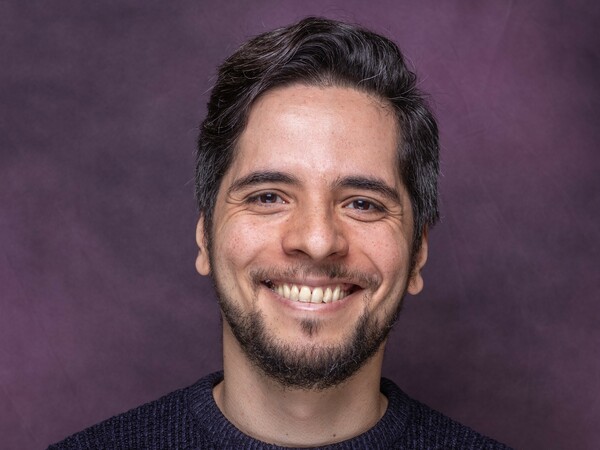
Prof.
Iacer Calixto
University of Amsterdam, Netherlands
Website
Iacer Calixto is an assistant professor at the University of Amsterdam and leads the NLP4Health Lab Amsterdam group. He is known for his research on trustworthy medical LLMs, with a focus on clinical reasoning, uncertainty, calibration, and fairness. His research focuses on developing reliable and responsible NLP and machine learning methods for high-stakes healthcare applications, addressing challenges such as factuality, uncertainty, bias, privacy, interpretability, and robustness. His work is particularly relevant to hallucination mitigation in medical settings, where unsupported or unreliable model outputs can have significant consequences for clinical decision-making and patient safety.
Organizers
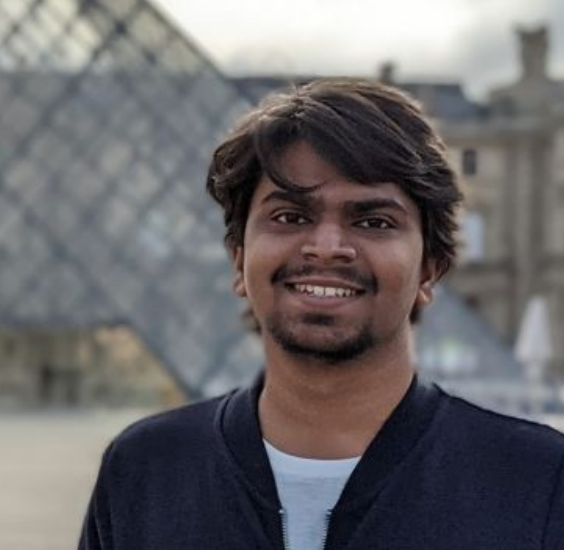
Aman Sinha
University of Geneva, Switzerland
Website

Chuyuan Li
University of Grenoble Alps, France
Website

Raul Vazquez
University of Helsinki, Finland
Website
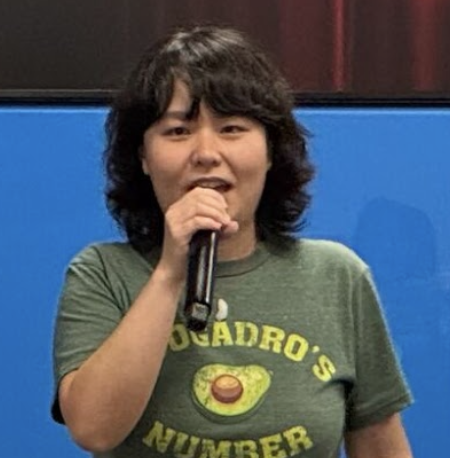
Boya Zhang
University of Geneva, Switzerland
Website
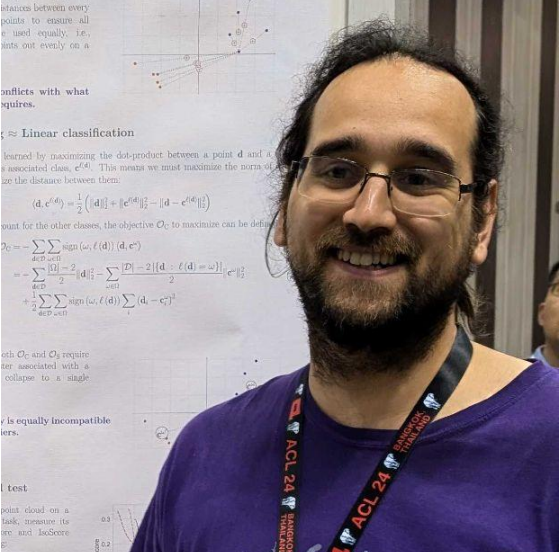
Timothee Mickus
University of Helsinki, Finland
Website
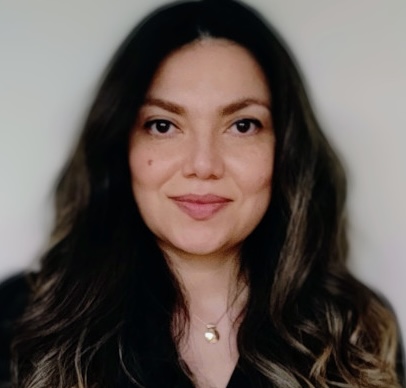
Nona Naderi
Université Paris-Saclay
Website
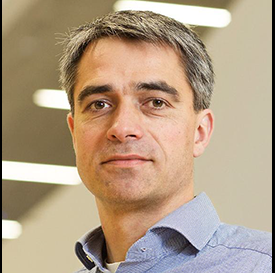
Jörg Tiedmann
University of Helsinki, Finland
Website
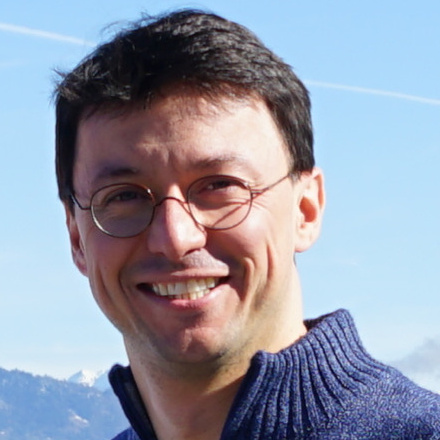
Douglas Teodoro
University of Geneva, Switzerland
Website
Previous Editions
- CHOMPS 2025: AACL-IJCNLP 2025 | Website | Proceedings